


Most people only look down when something gives them a reason to. A good floor decal does exactly that: it points shoppers to the sale rack, keeps a register line in order, or walks a visitor from the lobby door to the right elevator bank. The catch is that anything you stick on a floor becomes part of the walking surface, so it has to grip as well as it looks.
Non-slip floor decals for retail stores are printed vinyl graphics finished with a textured, slip-resistant overlaminate. That top layer protects the print from foot traffic and gives shoes traction, including on a wet floor. For NYC stores and building lobbies the material is only half the job. Where the decal goes, what floor it sits on and how it gets cleaned through a slushy January decide whether it stays safe for its whole life.
This guide covers what we check before we print custom floor graphics for a Manhattan storefront or an office lobby, so you can ask the right questions whoever makes yours.
What makes a floor decal non-slip
Wall and window vinyl has a smooth, often glossy face. Put it on a floor and it behaves like a patch of ice the first time someone walks in with wet shoes. Floor graphics are built differently. The printed film is covered with an overlaminate, a clear protective layer applied over the print. For floor use that laminate has a textured surface (it feels a little like very fine sandpaper) that adds friction underfoot and takes the scuffing so the ink doesn’t.
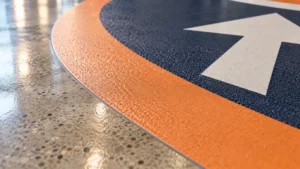 Slip resistance is measured as the static coefficient of friction, a number that describes how much force it takes to start a shoe sliding across a surface. In the US the reference test is UL 410, the Standard for Slip Resistance of Floor Surface Materials. Its June 2020 revision added requirements written specifically for floor graphic materials. In plain terms, a manufacturer can now test a floor graphic laminate against a published standard instead of just calling it “anti-slip” in a product description.
Our advice is simple. When you get a quote for floor decals from any shop, ask which laminate they use and whether it has slip-resistance test documentation. A shop that knows its materials will name the product right away. If the answer is vague, that tells you something too.
Where floor decals earn their space in a retail store
Floor space in a NYC store is tight, so every graphic should have a job. These are the placements we see work best:
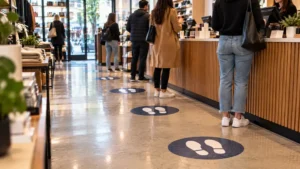
- Register and queue lines. Footprints or numbered spots keep a line straight in a narrow store and stop it from spilling into the aisle.
- Wayfinding to the back of the store. Arrows toward the fitting rooms, a pharmacy counter or a lower level pull people past the front table, which is where most small-store traffic stalls.
- Promotions at the point of decision. A decal at the end of an aisle or in front of a featured display reaches people while they are still choosing.
- Brand moments. A logo or short message placed just past the entrance mat gives the space a finished look, especially in small shops where shelving has taken over the walls.
Floor graphics work best as one part of a bigger plan. If the window announces a sale and the floor leads people straight to it, each one makes the other more effective. That is why our retail signage projects usually tie window, wall and floor graphics to the same message, and why we time floor promotions alongside seasonal window graphics.
Floor decals in building lobbies
Lobbies are a different job from retail floors. Traffic peaks hard at rush hour, the floors are often marble, granite or terrazzo, and a property manager or building owner almost always has to sign off.
The common uses are practical. Decals direct visitors to elevator banks or the security desk, mark a package room or amenity space, brand a lobby for a new tenant or a building relaunch, and post temporary notices during renovation work. In older prewar buildings they also solve a real problem: when management won’t allow drilling into stone walls for a new sign, the floor is often the one surface you can use.
Before you order, get a few answers from building management. Is the graphic approved, and does the installer need to provide a certificate of insurance? How long will it stay down? Who removes it, and what cleanup is expected on the stone afterward? These are much easier to settle up front than after a graphic has been down for a year and the adhesive has set.
If the floor decals are part of a larger system with directories and door signs, plan them together. Our guide to the types of wayfinding signs every business should have shows how those pieces fit.
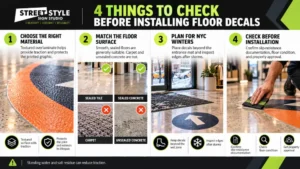
Match the decal to the floor
The adhesive needs a smooth, sealed, non-porous surface to hold, and the laminate needs to sit flat for its texture to do its job. Here is how the floors we see most often in NYC compare:
| Floor surface | Good fit? | What to watch |
|---|---|---|
| Sealed concrete (lofts, newer retail) | Yes | Make sure the sealer is fully cured and the floor is free of dust. Unsealed concrete absorbs moisture and the decal will lift. |
| Porcelain or ceramic tile | Yes | Wide or deep grout lines show through and can lift edges. Size the graphic to the tile grid or ask about a thicker textured film. |
| VCT and vinyl plank | Yes | Fresh wax or floor finish can block adhesion. Install after the finish has cured, not the same night it went down. |
| Marble, granite, terrazzo | Yes, with care | Polished stone is smooth, which helps. Use a removable adhesive and test a small piece in a hidden spot first. |
| Sealed hardwood | Yes | Gaps between boards in older floors can catch edges. Keep seams out of the main walking path. |
| Carpet, rugs, entrance mats | No | Use a printed logo mat or a carpet-specific graphic instead. |
| Outdoor sidewalk or plaza | Different product | Needs an outdoor-rated material made for rough concrete. Indoor floor decals won’t hold up outside through a NYC winter. |
NYC winters and the wet zone inside the door
Anyone who runs a store here knows the January floor: gray slush, rock salt and puddles tracked in from the curb all day long. The first few feet inside the door are the wettest and dirtiest part of the space, and that is exactly where people want to put a big welcome graphic.
Our recommendation is to keep floor decals beyond the entrance mat from roughly November through March. A textured laminate holds traction when it’s wet, but a film of salt and standing water still cuts grip on any surface. The edges of a decal also take the most abuse where shoes pivot and scrape. Set the graphic back far enough that people have dried their shoes on the mat first.
After a storm, walk the floor and check the edges. A corner that has started to lift is a bigger hazard than the laminate itself. If it presses back down and stays, fine. If it doesn’t, replace the decal rather than taping over it.
Salt residue also dulls the textured surface over time. Regular mopping with a neutral cleaner keeps the texture working, and we cover cleaning in more detail below.
Safety and accessibility basics
A floor decal becomes part of the floor, so the rules that apply to floors apply to it.
The 2010 ADA Standards for Accessible Design require floor surfaces on accessible routes to be “stable, firm, and slip resistant” (section 302.1). The same standards allow vertical changes in level of up to 1/4 inch (section 303.2). A properly installed floor decal is only a few thousandths of an inch thick, so the decal itself isn’t the issue. A lifted or curled edge is, because it turns a flat surface into something a cane tip, a wheelchair caster or a shoe can catch.
Think about your staff too. OSHA lists falls on the same level among the leading causes of serious work-related injuries, and your employees cross that floor graphic far more often than any single customer.
None of this is legal advice, and requirements can vary by building and use. The practical version: choose a tested slip-resistant laminate, keep the edges flat, and replace graphics before they wear through.
How long floor decals last and how to care for them
Lifespan depends on foot traffic, cleaning and how wet the floor gets. As a working range, floor decals in a busy store or lobby last several months to about a year, and in a quiet corner they can last much longer. A promotional graphic you plan to swap each season doesn’t need to outlive the promotion, so match the material to how long it really has to stay down.
Cleaning makes a bigger difference than most people expect:
- Mop with a neutral, pH-balanced floor cleaner and water.
- Keep auto scrubbers, scrub pads and buffers off the graphic and its edges.
- Skip solvent-based or heavy degreasing cleaners, which can soften adhesive at the edges.
- Never wax or refinish over a decal. Schedule floor refinishing for after removal.
Removal also gets harder the longer a decal stays down. Many floor graphic adhesives come up cleanly within the first six to twelve months, and leftover residue becomes more common after that. If a lobby graphic is meant to stay for a year or longer, say so when you order so the shop can pick a material suited to it.
A pre-install checklist
- Confirm the floor type and that it is sealed, clean and fully cured.
- Ask for the laminate name and its slip-resistance documentation.
- Get building or landlord approval in writing, including who handles removal.
- Mark placement past the entrance mat and clear of door swings.
- Keep standard floor decals off stair treads, ramps and thresholds.
- Book the install after closing, when the floor is dry and empty.
- Put a date on the calendar to check edges and plan the replacement.
Frequently Asked Questions About Non-Slip Floor Decals in NYC
How long do non-slip floor decals last?
In a busy retail store or lobby, most non-slip floor decals last several months to about a year. Lighter traffic, gentle cleaning and dry floors stretch that. Once the texture is worn smooth or an edge keeps lifting, replace the graphic.
How do I clean floor decals?
Mop them with a neutral floor cleaner and water, the same way you clean the rest of the floor. Keep scrubber machines and buffers off the graphic and its edges, and never wax or refinish over it.
How much do custom floor decals cost?
It depends on size, quantity, shape and the laminate. A round promotional decal and a large lobby graphic cut to fit a tile pattern are very different jobs. Send us your floor type, measurements and how long the graphic needs to stay down, and we will quote it.
Are floor decals safe on wet floors?
A decal finished with a textured slip-resistant laminate keeps traction when wet, which smooth vinyl does not. Standing water and salt residue still reduce grip on any surface, so keep decals out of the wettest entry zone in winter and check the edges after storms.
Can floor decals go on marble or terrazzo?
Yes. Polished stone is smooth and non-porous, which helps the adhesive hold. Use a removable adhesive, test a small piece in a hidden spot first, and agree with building management on how and when it comes off.
Can floor decals be used outdoors in NYC?
Standard indoor floor decals should stay indoors. Sidewalks and plazas need an outdoor-rated material made for rough concrete and weather, and even then the lifespan is shorter. Tell us about the location before you order and we will recommend the right product.
Planning floor graphics for your store or lobby
Floor decals are one of the simplest ways to change how people move through a space, as long as they are made and placed for the floor they are going on. Street Style Sign Studio designs, prints and installs floor graphics in NYCfor stores, offices and building lobbies across the five boroughs, Yonkers and New Rochelle.
For an idea of what is possible beyond retail, see our event floor graphics case study, a non-slip dance floor graphic that was installed and removed around a single wedding.
Send us your floor type, a few photos and rough measurements, and we will recommend a material and placement. Call (917) 508-0600 or request a quote.