

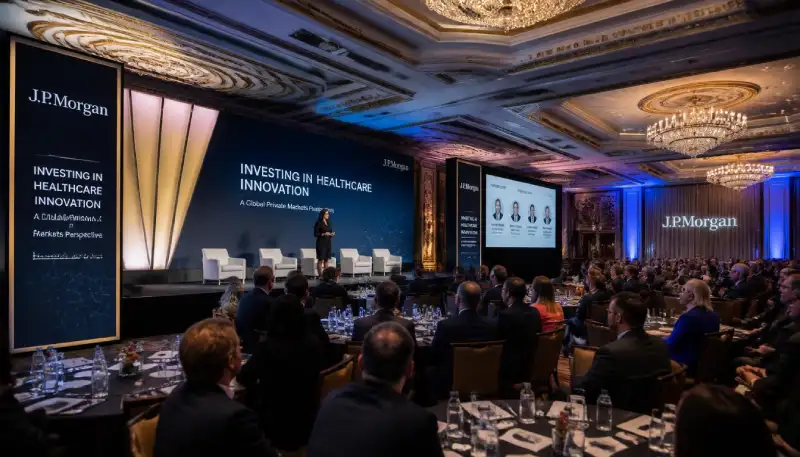
If you’ve ever walked into a hotel ballroom in Midtown for a corporate event and had no idea which set of doors led to the actual session, you already know why signage gets planned weeks in advance instead of days. Corporate event signage for NYC hotels and conference centers, the directional signs, step-and-repeat backdrops, registration graphics, and sponsor walls that guide guests and brand the room, works best when a vendor understands two things at once: how hotel loading docks and freight elevators actually operate, and how fast a Manhattan conference schedule moves. Get both right and the signage disappears into the background the way it should. Get either wrong and it becomes the thing people remember for the wrong reasons.
Quick answer: corporate event signage for NYC hotels and conference centers usually means wayfinding signs, a step-and-repeat, registration desk graphics, and a sponsor or donor wall, ordered two to four weeks out and built around each venue’s loading dock and fire code rules. A multi-day conference needs a bigger signage package and a longer lead time than a single afternoon meeting.
What Corporate Event Signage Actually Covers
Corporate event signage – the physical graphics and printed materials that direct, brand, and inform attendees at a business event – sits in a different category from retail signage or storefront branding. A corporate event usually runs inside a hotel ballroom, a conference center floor, or a rented meeting suite, which means every sign has to work inside someone else’s building for a single day or a single week, then come down without leaving a mark.
That constraint shapes almost every decision. Adhesive that’s fine on a storefront window can strip paint off a hotel wall. A banner that hangs without issue in a warehouse might violate a conference center’s fire marshal rules if it blocks a corridor sightline. Anyone planning corporate event signage for a New York City hotel or conference venue needs a production partner who has actually worked inside these buildings, not one that’s only ever printed the graphics.
In our experience producing signage for hotel events across Manhattan and Brooklyn, the properties that run the smoothest install days are the ones where the event planner shares floor plans and room dimensions before the first proof goes out, not after. A vendor who asks for ceiling height, corridor width, and loading dock hours up front is trying to prevent a problem, not create paperwork.
The Signage Types Every NYC Hotel Event Needs
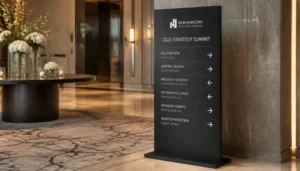
Most corporate events in New York draw from the same short list of signage types, just scaled to the size of the event.
Wayfinding and directional signs get attendees from the lobby to the right floor, room, or session without a stop at the concierge desk. In a large conference center this might mean a dozen individual signs; in a single hotel ballroom it might mean two or three well-placed easel signs.
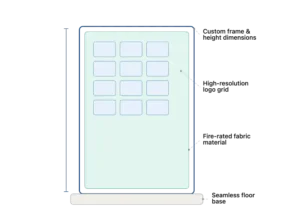
A step-and-repeat backdrop, the branded wall attendees stand in front of for photos, is standard at nearly every corporate event with a media or social component. It needs to be built to the exact height of the space, since hotel ballroom ceilings vary more than most planners expect.
Registration and check-in graphics set the tone the moment attendees walk in. A well-branded check-in table with a matching backdrop reads as a bigger production than the same table with a folding sign taped to the front.
Sponsor and donor walls carry the most pressure to get right, since sponsors are paying for visibility and will notice if their logo is misaligned, low-resolution, or placed below a competitor’s.
Digital signage, monitors or LED displays showing schedules, sponsor logos, or session directions, is worth considering for multi-day conferences where the agenda changes daily. For a single-day meeting where nothing changes, printed graphics are usually the more practical and cost-effective call.
Welcome and lobby signage is easy to skip on a tight budget but does more work than its size suggests. A single well-placed welcome sign near the hotel’s main entrance or lobby confirms to arriving attendees, some of whom have never been to the property before, that they’re in the right building before they even reach the elevator bank.
Working Around Hotel and Conference Center Logistics in NYC
NYC hotels and conference venues operate under rules that a signage vendor learns by working the buildings directly, not by reading a spec sheet.
Loading docks and freight elevators run on a schedule, and a busy Midtown hotel might give a vendor only a ninety-minute window to bring signage up before a morning session starts. Show up outside that window and the install gets pushed, sometimes past the event’s start time.
Union labor requirements apply at many larger convention-style venues, where an outside vendor may not be permitted to hang or install signage without coordinating through the venue’s in-house team. A vendor who has installed at these buildings before knows which ones require this and builds it into the timeline instead of finding out on event day.
Fire code and material rules matter more indoors than most planners realize. A banner hung across a corridor, a step-and-repeat placed too close to an exit, or adhesive-backed graphics on the wrong wall finish can all get flagged by a venue’s fire marshal or facilities team during setup. Confirming material and placement with the venue ahead of time avoids a same-day scramble to swap something out.
Hotels also host a wide mix of events beyond corporate meetings, weddings, galas, and school functions among them, and the standards a venue applies to hotel signage in general often carry over to its conference and meeting spaces. We produce floor graphics for weddings and galas in those same venues, with pre-event installation and clean removal. A vendor experienced across hotel work tends to understand a property’s house rules for all of these use cases, not just the one event type on the calendar that week.
Material choice matters as much as the rules around it. Fire-rated fabric backdrops are the safer default for indoor ballroom use and are what most NYC venues expect for a step-and-repeat or sponsor wall, while rigid foam board or coroplast signs work fine for lobby wayfinding that isn’t near an open flame or a kitchen line. A vendor should be able to say, without hesitation, which material a specific venue requires.
Timeline: When to Order Signage Before a Corporate Event
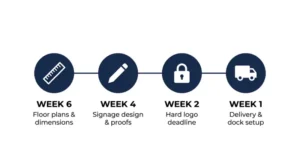
A single-day meeting with a handful of signs can move on a two-week timeline if the venue and sponsor logos are locked in early. A multi-day conference with a full corporate event signage package, wayfinding, a step-and-repeat, registration graphics, a sponsor wall, and possibly digital displays, needs four to six weeks to leave room for proofs, sponsor sign-off, and a reprint if a logo file comes in late.
The biggest delay risk isn’t production, it’s approval. Sponsor logos routinely arrive late or in the wrong file format, and a sponsor wall can’t go to final print until every logo is finalized. Building a firm logo deadline into the event timeline, two weeks before the event at the latest, protects the rest of the schedule.
Budgeting for a One-Day Meeting vs a Multi-Day Conference
A one-day corporate meeting in a single hotel ballroom typically needs a smaller signage footprint: a few directional signs, one step-and-repeat, and registration graphics. A multi-day conference scales up fast, more wayfinding across a larger footprint, possibly a different sponsor wall for each day, and daily schedule updates if using digital displays.
Reusable signage helps stretch a multi-day budget. Wayfinding signs and welcome graphics built without event-specific dates can be reused across multiple conferences in a year, while sponsor walls and dated materials get produced fresh each time.
For events with paying sponsors, it’s worth building signage cost into the sponsorship package itself rather than absorbing it into the general event budget. A sponsor wall placement is a tangible benefit that’s easy to describe in a sponsorship deck, and pricing it in gives the signage line item its own budget instead of competing with catering and AV for the same dollars.
Bringing It All Together
Corporate event signage for NYC hotels and conference centers comes down to matching the right signage types to the venue’s real logistics: the loading dock schedule, the fire code rules, and the sponsor approval timeline. Planning it a month out instead of a week out is what separates hotel and conference venue signage that just gets installed from signage that actually reads as part of the event.
Frequently Asked Questions
How far in advance should we order signage for a corporate event in NYC?
Order signage two to four weeks before a single-day meeting and four to six weeks before a multi-day conference with a full package. The extra lead time protects against late sponsor logos, the most common cause of a rushed reprint.
Do hotels allow outside signage vendors to install directly?
Most hotels allow outside vendors, but many require a booked loading dock and freight elevator window in advance, plus adherence to the property’s material rules. Larger convention-style venues sometimes require union labor for installation, so confirming this with the venue early avoids a same-day surprise.
What size should a step-and-repeat backdrop be for a hotel ballroom?
Ballroom ceiling heights vary more than most planners expect, so the backdrop should be measured to the specific room instead of ordered at a standard size. Requesting exact room dimensions before production avoids a backdrop that’s too short for the space or too tall to fit through a service corridor.
Can the same signage be reused for multiple corporate events?
Wayfinding signs, directional graphics, and general welcome signage can be reused across events as long as they don’t include event-specific dates. Sponsor walls and dated materials need to be produced fresh for each event since sponsor lineups and dates change.
What’s the biggest cause of signage delays for corporate events?
Late sponsor logos. A sponsor wall or step-and-repeat can’t go to final production until every logo is confirmed, so a hard logo deadline, roughly two weeks before the event, keeps a late sponsor from delaying the entire order.