

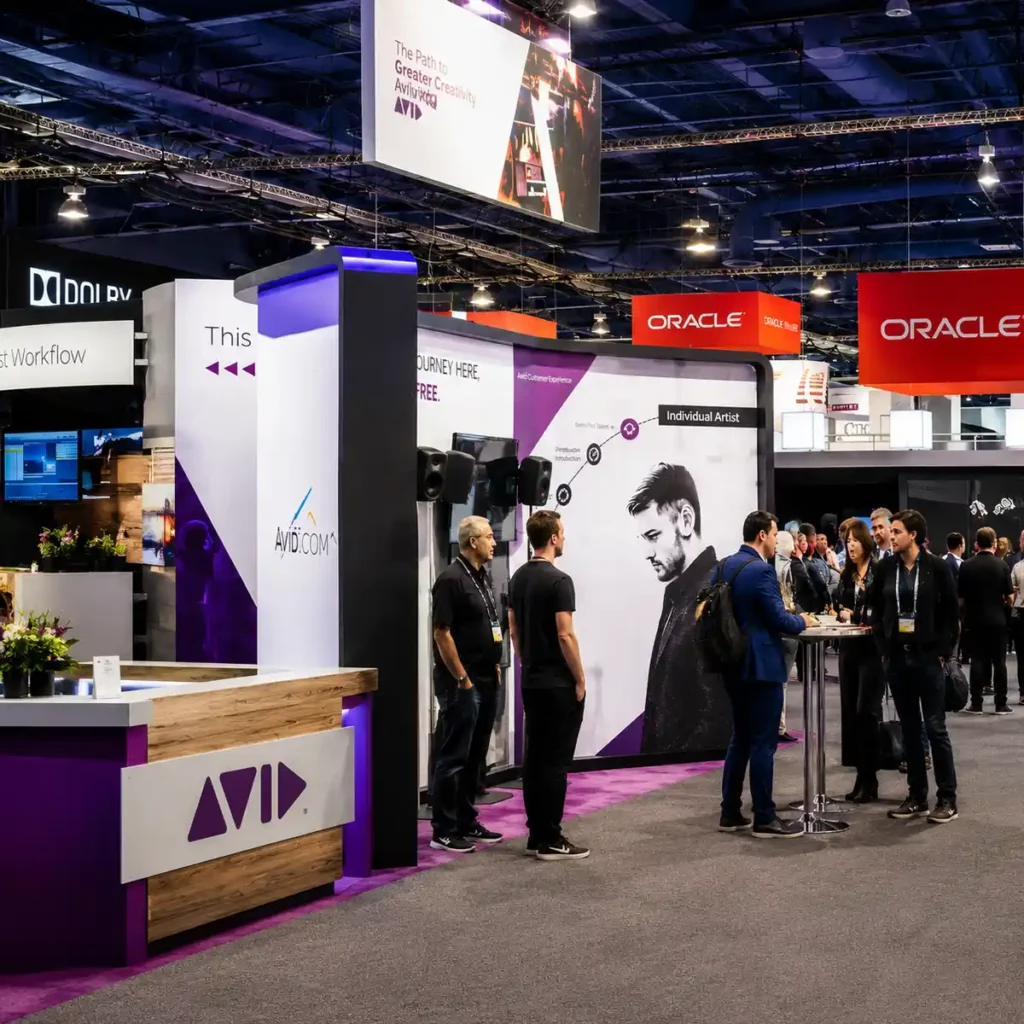
A trade show floor gives every exhibitor the same problem: a few square feet to make a case for the whole company before someone walks past. Retractable banner stands for NYC trade shows and conferences solve the space problem directly, packing a full-size branded display into a case that one person can carry, set up in under a minute, and break down just as fast when the show ends. For exhibitors juggling a full calendar of shows across the city, from the Javits Center to smaller industry conferences in Midtown, that combination of speed and portability often matters more than any other feature on the spec sheet.
Why Retractable Banner Stands Are a Trade Show Staple
Convention centers across NYC don’t leave exhibitors much room to work with. Aisles are tight, booth footprints are small, and setup windows before doors open are often shorter than exhibitors would like. A retractable stand solves that by rolling the graphic into a self-contained base, so the entire display travels as a single case instead of a rolled tube and a separate frame that needs assembly on site.
That portability matters as much for repeat use as it does for setup day. A stand that survives a dozen shows without the graphic cracking or the mechanism sticking pays for itself well past the first event, which is why most exhibitors treat retractable banners as a standing asset rather than a one-time purchase. Airlines, trucking companies, and conference staff moving equipment between venues on tight schedules also favor the format simply because a single case is easier to check as luggage or load into a van than a bundle of poles and a rolled graphic.
The format has also become something of a default expectation on trade show floors. Attendees walking a busy aisle have learned to expect a certain visual language, clean stand, clear headline, branded base, and booths that skip it can end up reading as less established or less prepared than their neighbors, even when the underlying product or service is just as strong.
The Real Cost of Cheap Banner Stands
It’s tempting to treat a retractable stand as a commodity and order the lowest-priced option available, but the total cost of a stand shows up differently depending on how many shows it needs to survive. A budget stand with a thin base and low-grade spring mechanism might save a few dollars on the first invoice, but a mechanism that starts sticking after ten or fifteen uses turns into a replacement cost within a single year for any company on a regular show circuit.
Graphic quality follows the same pattern. Lower-resolution printing and thinner banner material show wear, curling at the edges, fading, visible creasing from the roll, well before a heavier-grade print does. For a company that exhibits once a year, that difference might not matter much. For a company running six or eight shows annually, it adds up to a stand that looks tired by the third event of the season, undercutting the exact branding impression the display was bought to create.
Choosing the Right Stand for Your Booth
Not every retractable stand fits every booth layout, and the differences between models matter more once a company is running back-to-back shows on a busy conference calendar.
Standard vs. Premium Mechanisms
Entry-level stands use a simpler retraction mechanism that’s fine for occasional use, while premium mechanisms are built for daily setup and teardown across dozens of events per year without the spring mechanism wearing out. Companies exhibiting frequently in NYC’s convention circuit are usually better served by the premium tier, even at a higher upfront cost, since the mechanism is the single most common point of failure on a heavily used stand.
Single-Sided vs. Double-Sided Graphics
A single-sided stand works well against a booth wall or backdrop, while double-sided stands are built for placement in walkways or open floor space where attendees approach from either direction. Double-sided models cost more but avoid a blank backside in high-traffic aisles, which matters most for booths positioned as a standalone island rather than against a back wall.
Base Material and Stability
Base weight and material affect how a stand handles the foot traffic and occasional bumps of a crowded aisle. A lightweight base is easier to carry between venues but can tip more easily in a busy walkway, while a heavier, wider base trades a bit of portability for stability in high-traffic placements. Companies exhibiting in narrow aisle configurations, common at many NYC conference venues, often find the added stability worth the extra weight in the case.
Design Considerations for Conference and Trade Show Graphics
A retractable banner is read from a distance before an attendee ever gets close enough to read a booth’s full messaging, so the graphic needs a clear hierarchy: a headline visible from 15 to 20 feet, a supporting line for the walk-up, and a call to action near the bottom where someone standing at the booth will actually read it. Cramming a full pitch onto the banner defeats the purpose. The stand’s job is to earn a second look, not close the sale on its own.
Color contrast plays a bigger role than most first-time exhibitors expect. Convention hall lighting varies widely, some venues run bright and even, others leave aisles dimmer than a booth’s own lighting can fully compensate for, so high-contrast color choices between text and background hold up better across venues than subtle, low-contrast palettes that look fine on a laptop screen but wash out under fluorescent hall lighting.
This is also where a retractable stand pairs naturally with a broader trade show display setup, tables, counters, and backdrop panels, so the standalone banner reinforces the same branding rather than competing with it. A stand that uses a different color palette or font treatment than the rest of the booth can look like an afterthought rather than a coordinated presence, even if each individual piece looks fine on its own.
Retractable Stands vs. Pop-Up Displays: Which Fits Your Show Calendar
Retractable stands aren’t the only portable option on a trade show floor, and it’s worth understanding where a pop-up display makes more sense before defaulting to a retractable banner for every booth.
A pop-up display, a curved or straight fabric backdrop on a collapsible frame, covers far more square footage than a single retractable stand and works better as a full booth backdrop rather than a standalone accent piece. The tradeoff is setup time and case count: a pop-up display typically takes several minutes to assemble and travels in a larger, heavier case, compared to the under-a-minute setup and single compact case of a retractable stand.
For companies running a single flagship booth at a handful of major shows each year, a pop-up display’s larger footprint often justifies the extra setup time. For companies moving fast between many smaller shows, a retractable stand’s speed usually wins out. Many exhibitors on a busy NYC show calendar end up using both as part of a full trade show display strategy, a pop-up backdrop as the primary booth wall and one or two retractable stands positioned at aisle-facing corners.
Lighting and Accessories to Extend Your Booth Presence
A retractable stand’s impact changes considerably depending on the lighting around it, and convention hall lighting is rarely as bright or as even as exhibitors expect walking in. Clip-on LED lights designed specifically for retractable stands mount directly to the pole and illuminate the graphic without requiring a separate power run across the aisle, making them a common add-on for booths in dimmer sections of a show floor or evening events where ambient light drops off entirely.
Counter attachments and small literature pockets are another common accessory, letting a single retractable stand double as both a branded backdrop and a functional touchpoint for handing out a card or brochure without needing a separate table. For booths with limited floor space, this kind of multi-purpose setup often makes more sense than adding a second furniture piece just to hold literature.
Ordering and Caring for Your Retractable Banner Stand
Standard retractable stands ship in common sizes from 33 to 48 inches wide, with height typically around 80 inches, though wider premium models are available for booths that want a larger presence. Production and shipping for a standard order typically run 3 to 5 business days, with rush options available ahead of a fast-approaching show date.
Between shows, the graphic should be stored rolled inside its case rather than left extended, and the base mechanism should be wiped down periodically to keep the retraction smooth. Dust and grit picked up from convention center floors can work into the mechanism over time, so a quick wipe-down before repacking after each show adds up to a meaningfully longer mechanism lifespan.
A stand cared for this way holds its print quality and mechanical function across years of repeat trade show use, and companies running a full show calendar often keep a spare graphic cartridge on hand so a stand can be updated with new messaging or branding without replacing the entire base.
FREQUENTLY ASKED QUESTIONS
How long does it take to set up a retractable banner stand?
Most retractable banner stands set up in under a minute, since the graphic and base are a single self-contained unit that only requires extending the pole and pulling up the banner. No separate frame assembly is needed, which is why they’re the standard choice for fast-turnaround trade show setups.
What size retractable banner stand works best for a trade show booth?
Standard widths run from 33 to 48 inches, which fit comfortably within most standard 10×10 booth spaces without overwhelming the layout. Wider premium models are available for booths that want a more prominent standalone display.
Single-sided or double-sided: which do I need?
Single-sided stands work well placed against a wall or backdrop, while double-sided stands are built for open floor placement where attendees approach from either direction. Booth location and floor plan should decide which version to order.
How many times can a retractable banner stand be reused?
A well-made stand with a premium mechanism can handle dozens of events over several years without the graphic cracking or the retraction sticking. Proper storage, rolled inside the case rather than left extended, extends that lifespan further.
How far in advance should I order a retractable stand for a conference?
Standard production and shipping run 3 to 5 business days, so ordering at least one to two weeks ahead of the show date leaves room for design revisions. Rush production is available for shows booked on shorter notice.