
The US Open Tennis Championships return to the USTA Billie Jean King National Tennis Center on August 24, 2026, and for the two to three weeks surrounding that date, Flushing Meadows and the transit corridors feeding it become one of the highest-traffic, highest-visibility stretches on the entire NYC event calendar. Unlike a single-day street fair or block party, the US Open runs as a sustained event window, which changes almost everything about how event banners and sponsor signage need to be planned, built, and installed.
Why the US Open Is a Different Kind of Signage Project
Most NYC outdoor events last a single day or a single weekend. The US Open runs across roughly two and a half weeks of qualifying and main draw matches, with day sessions and night sessions under stadium lighting, and a surrounding footprint that extends well past the tournament gates. A banner or sign put up for this window needs to survive daily exposure, direct sun during day sessions, and stadium floodlight glare during night sessions, without the fading or wear a single-day event banner never has to account for.
That extended timeline also means signage decisions carry more weight than they would for a one-day fair. A banner ordered for a single street fair Saturday is a sunk cost either way once the day ends. A banner meant to carry sponsor branding or business promotion for the better part of a month needs a level of durability and design planning closer to a short-term outdoor campaign than a quick event print.
Where Businesses and Sponsors Actually Need Signage
The tournament grounds themselves are only part of the picture. Businesses and sponsors with a stake in US Open visibility typically need signage across several distinct zones around the event.
Near the USTA Billie Jean King National Tennis Center
Restaurants, hotels, and retail businesses within walking distance of the grounds see a sustained lift in foot traffic for the full tournament window, not just on marquee match days. Storefront and sidewalk signage timed to the tournament dates gives these businesses a way to capture attendees moving to and from the grounds before and after sessions.
Along Transit Corridors
The 7 train and LIRR routes feeding Flushing Meadows carry a significant share of the tournament’s daily attendance, and sponsors or businesses along those corridors, near stations, along the walk from the platform to the gates, have a natural signage opportunity that a typical NYC event doesn’t offer at this scale. Banners placed along these routes reach attendees during the transit window itself, when they’re already primed for tournament-related messaging.
At Watch Parties and Viewing Events
Bars, restaurants, and venues hosting US Open viewing parties across the city, not just in Queens, benefit from event signage announcing match schedules, sponsor tie-ins, or promotional offers tied to specific sessions. This audience is broader and more citywide than the foot traffic immediately around the grounds, and signage for these locations often needs faster turnaround since watch party plans can firm up closer to specific high-profile match dates.
Sponsor Row and Hospitality Signage
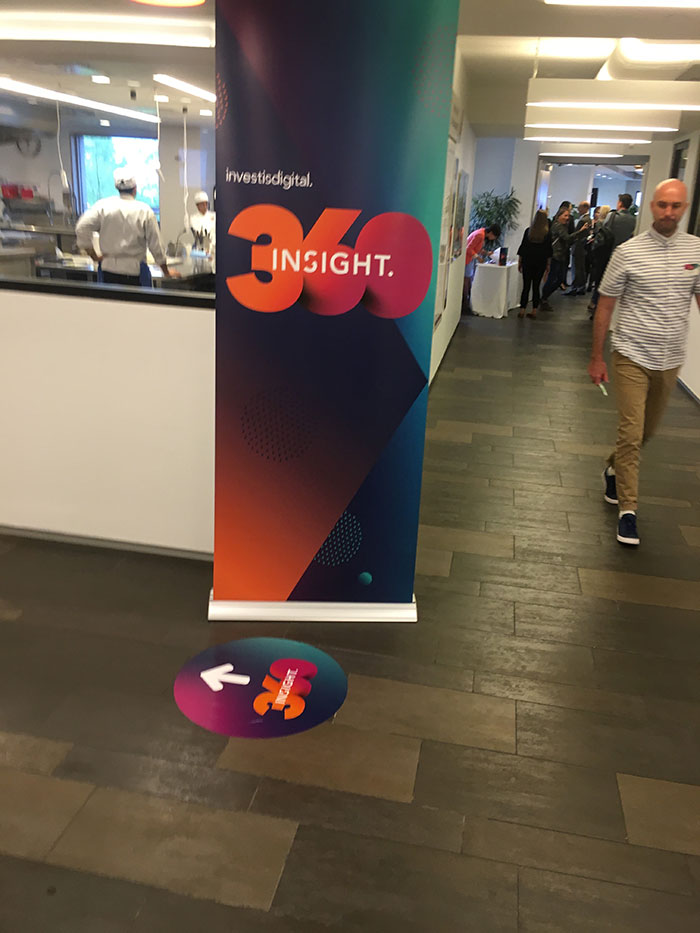
Corporate sponsors and hospitality partners activating around the tournament typically need a coordinated signage package rather than a single banner. Sponsor row placements, hospitality suite entrances, and branded activation spaces all benefit from carrying one consistent visual identity across the full footprint, so a sponsor’s presence reads as a unified activation rather than a scattered collection of individual signs.
This is where banner branding pairs naturally with a full event signage package, entrance signage, directional signs, step-and-repeat photo walls for media check-ins, and sponsor row banners, all produced together so the design language matches from the transit corridor through to the hospitality suite door. Coordinating these pieces as one order also simplifies production scheduling, since everything moves through the same design and print timeline instead of being handled as separate last-minute requests.
Banner Specs Built for a Multi-Week Tournament Window
A banner meant to hold up across the full US Open window needs heavier material and finishing than a standard single-day event print. Eighteen-ounce vinyl banner material with reinforced grommets handles the repeated exposure of a two-to-three-week installation noticeably better than lighter-weight material, which can show fading or edge fraying well before the tournament’s final matches.
Night session visibility is worth planning for specifically. Stadium floodlighting and the general evening atmosphere around the grounds change how color and contrast read compared to daytime installation, so signage meant to be visible during evening sessions benefits from high-contrast color choices and, where relevant, reflective or illuminated elements rather than a design optimized only for daylight viewing.
Placement also needs to account for the sustained foot traffic pattern rather than a single burst. A banner positioned for a Saturday street fair crowd moving through in a few hours is a different design problem than one meant to perform for three weeks of daily pedestrian flow at varying times of day.
Planning Your US Open Signage Timeline
Given the fixed August 24, 2026 start date, signage tied specifically to the tournament should be ordered well ahead of the surrounding weeks’ demand spike. Businesses and sponsors near the grounds or along transit corridors should plan for production and installation to be complete before the tournament’s opening days, since demand for both printing and installation crews rises sharply as the date approaches and rush capacity fills quickly during the surrounding summer event season.
Coordinating Signage With Local Permitting and Event Organizers
Signage placed on private property, storefronts, restaurant frontage, hotel entrances, doesn’t typically require the same permitting as banners hung across public streets or attached to municipal infrastructure. Businesses installing their own storefront or sidewalk-facing signage within their own property line generally have more flexibility and a shorter runway than sponsors looking to place banners along public transit corridors or attach signage to city-owned structures near the grounds.
Sponsors and organizers planning anything beyond private storefront signage, banners on fencing along a public corridor, directional signage tied to a City-permitted activation, should build permitting lead time into the production schedule rather than treating it as an afterthought once artwork is finalized. Given the scale of foot traffic the tournament brings to the surrounding neighborhood, requests that touch public right-of-way or transit-adjacent property tend to move through additional review compared to a standard private storefront order, and that review timeline should be accounted for well before the August dates arrive.
Working with a signage partner familiar with both the tournament’s surrounding footprint and the practical realities of production timelines helps sponsors avoid the common trap of finalizing creative first and discovering placement constraints only once installation day is close. Confirming where a banner or sign can actually go, before locking in final artwork, saves a reprint down the line.
Making the Most of a Once-a-Year Visibility Window
For most businesses and sponsors, the US Open represents a concentrated visibility opportunity that doesn’t repeat again until the following summer. That scarcity is worth factoring into how much signage investment makes sense relative to a typical week of the year. A restaurant that sees double or triple its usual foot traffic for two and a half weeks has a narrow window to convert that attention into repeat customers, and clear, well-placed signage announcing hours, specials, or viewing availability does more of that conversion work than generic storefront branding left unchanged from the rest of the year.
The same logic applies to sponsors evaluating the size of their signage package. A single entrance banner captures a fraction of the value that a coordinated presence across transit corridors, hospitality entrances, and sponsor row can capture over the full tournament run. Given the fixed, non-recurring nature of the date, treating signage as a one-time line item rather than a lasting piece of the year’s marketing budget usually reflects the actual value of the window more accurately.
FREQUENTLY ASKED QUESTIONS
How far in advance should I order signage for US Open Tennis 2026?
Signage should be ordered well before the August 24, 2026 start date, ideally several weeks ahead, since production and installation demand rises sharply as the tournament approaches. Sponsors coordinating a multi-piece hospitality package should start even earlier given the added design and production steps involved.
What banner material holds up best for a three-week tournament run?
Eighteen-ounce vinyl with reinforced grommets is built to withstand the sustained daily exposure of a two-to-three-week installation without the fading or edge fraying lighter material shows over the same period. This is the standard choice for any signage meant to last the full tournament window rather than a single day.
Do businesses near the tournament grounds need a permit for storefront signage?
Signage installed within a business’s own property line, storefronts, entrances, sidewalk-facing displays, generally doesn’t require the same permitting as banners on public streets or city infrastructure. Anything extending onto public right-of-way or transit-adjacent property should be planned with additional permitting lead time in mind.
What’s the difference between signage for the tournament grounds versus a citywide watch party?
Signage near the grounds and transit corridors targets sustained daily foot traffic tied to session times, while watch party signage serves a broader, citywide audience and often needs faster turnaround since plans can firm up closer to high-profile match dates. Both benefit from consistent branding if a business or sponsor is active in multiple locations.
Can event banners and sponsor signage be designed as one coordinated package?
Yes, entrance signage, directional signs, step-and-repeat photo walls, and sponsor row banners are commonly produced together so branding stays consistent from the transit corridor through the hospitality suite entrance. Ordering as one coordinated package also simplifies production scheduling compared to handling each piece separately.