

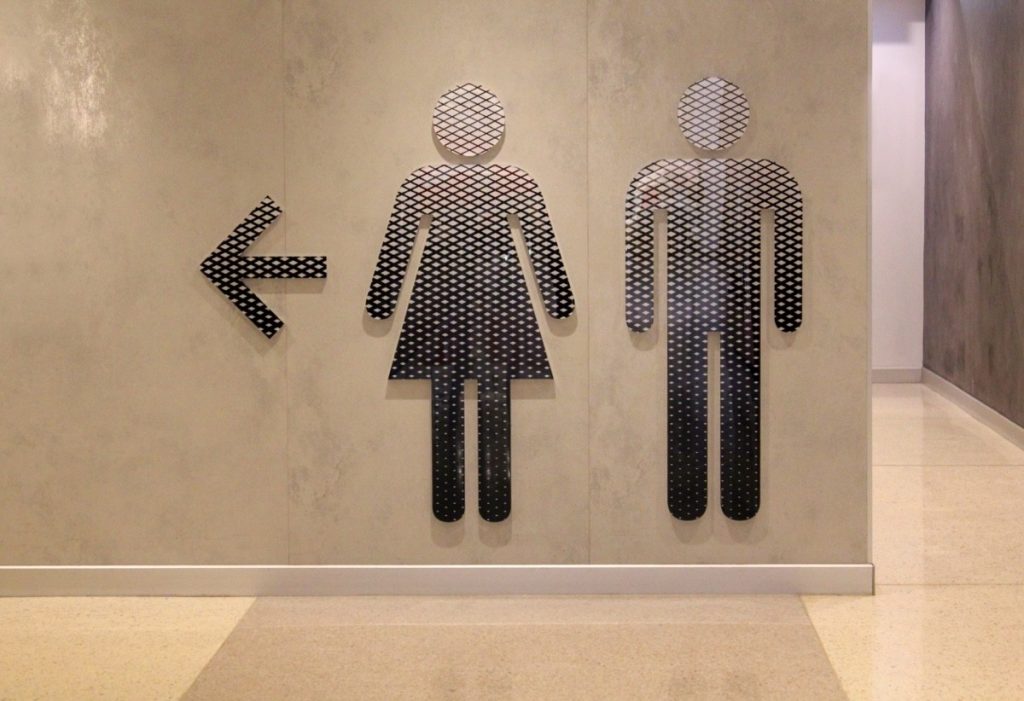
Can someone with visual impairments confidently find your restroom without asking for help?
If you’re unsure, it’s time to take a closer look at your public restroom signs. Compliance with the Americans with Disabilities Act (ADA) isn’t just a box to tick; it shapes how people experience your space. Braille signage and tactile signs aren’t optional; they’re essential tools that support independent movement and clear wayfinding for people with disabilities.
In this article, you’ll learn how to design effective ADA bathroom signs, meet specific ADA signage requirements, improve navigation for all users, and create a more welcoming, accessible environment.
Understanding ADA Requirements for Public Restroom Signs
The ADA signage requirements define clear standards for facilities to design signs that improve usability for everyone. These guidelines are especially critical for restrooms in public buildings, where people rely on tactile and visual cues to navigate unfamiliar environments.
Every ADA bathroom must include properly mounted bathroom signs that feature raised characters, braille characters, and a nonglare finish. The background and text must follow high contrast rules, either light on dark or vice versa, to ensure legibility in varying lighting conditions.
Placement matters. Restroom signs identifying permanent rooms must be mounted on the wall beside the latch side of the door. The baseline of the lowest tactile character must be at least 48 inches from the floor, and the highest character no more than 60 inches. This height range ensures that ADA signs are accessible to people using wheelchairs or other mobility aids.
Using compliant signs is more than a legal necessity. It promotes equal access, builds trust, and supports a better experience for visitors with disabilities. Skipping these features doesn’t just risk noncompliance—it limits the usability of your space.
Key Tactile and Braille Features That Improve Accessibility
Understanding the finer points of tactile and braille signage is important for designing effective ADA bathroom signs. These features work together to help users with visual impairments navigate restrooms independently and confidently.
Start with the tactile characters. These must be raised characters, presented in all uppercase, using clear fonts that avoid decorative or script styles. Each character should be elevated 1/32 inch from the sign surface and spaced evenly for accurate tactile reading. These details ensure users can scan by touch without confusion.
The braille signs must follow Grade 2 braille formatting directly below the text. This includes using braille contractions, domed or rounded braille dots, and well-spaced braille cells. Braille characters should be kept at least 3/8 inches away from any decorative elements, raised borders, or other elements. This spacing improves readability and avoids clutter.
Specific braille requirements also guide how content is structured. Uppercase braille should only appear for the first word in a sentence, proper nouns, acronyms, or individual letters. For signs with multiple lines, place braille below the entire text block.
Color contrast is another priority. Aim for strong visual contrast, whether you’re designing restroom signs, directional signs, or labels for room numbers. Using light on dark or dark on light color schemes improves readability for users with low vision, especially in varied lighting conditions.
When these requirements are applied correctly, ADA signs go beyond minimum standards. They deliver accessible features that serve real users, enhancing comfort and confidence across your public spaces.
Get Placement Right for Easy, Predictable Navigation
Even well-designed bathroom signs lose their effectiveness if placed incorrectly. Proper installation is key to creating accessible spaces that support consistent, intuitive wayfinding.
Mount ADA bathroom signs on the wall adjacent to the latch side of the door, not on the door itself, unless there’s no viable alternative. The height range must fall between 48 and 60 inches from the floor to the baseline of the tactile characters. This ensures your ADA signs are easily reachable for all users, including those using wheelchairs or mobility aids.
The surrounding area must offer clear floor space, allowing visitors to approach and read the signs without obstruction from furniture, fixtures, or displays. Consistency in placement across all restrooms also helps. When restroom signs appear in the exact location throughout a facility, users with visual impairments can navigate more quickly using memory and touch.
Directional signs with well-positioned arrows become essential in larger environments, like airports, malls, hospitals, or schools. Even though these signs don’t always require braille, they must still follow ADA standards for contrast, visibility, and readability.
Applying these placement rules doesn’t just check off a requirement; you support access, reduce frustration, and create a more welcoming space for everyone who walks through your doors.
Upgrade Your Restroom Signs with Street Style Sign Studio
If your restroom signs lack braille, use incorrect tactile characters, or are mounted in the wrong location, it’s time for a meaningful update.
At Street Style Sign Studio, we design and deliver ADA bathroom signs that combine function, clarity, and visual consistency. Regardless of your signage needs, from identifying permanent rooms, guiding users with directional arrows, or labeling key accessible features, our team ensures every element meets both design expectations and ADA signage requirements.
We help businesses and organizations across industries make their public spaces more straightforward to navigate through ADA-compliant signage, proper placement, and expert use of custom graphics. Our experience covers everything from braille and tactile signs to exterior signs and control panels, always focused on delivering clear, functional outcomes.
You’re not just installing signs. You’re showing that your space values accessibility, usability, and comfort for all visitors, including those with cognitive disabilities, low vision, or mobility challenges.
Ready to bring your bathroom signs up to standard and make your facility more straightforward? Contact Street Style Sign Studio today, and let’s build more innovative, more welcoming spaces one compliant sign at a time.