
Get Professional Signage That Boosts Your Business Visibility, Fast & Hassle-Free!
Dimensional Signs
A flat, printed sign is just information. A dimensional sign is a statement. Street Style Sign Studio fabricates and installs custom dimensional signs in New York City that transform your logo and letters from 2D graphics into high-impact architectural features.
We give your brand the physical presence and permanence it deserves as part of a cohesive interior signage system, from your lobby to your conference rooms.
We work with businesses, architects, and designers across Manhattan, Brooklyn, Queens, Long Island, and Jersey City to create 3D signs that command attention and convey quality.
What Is a Dimensional Sign?
A dimensional sign is a sign built with physical depth, most often cut logo letters or a shape mounted a short distance off the wall, rather than printed flat against it. The raised profile catches light and casts a shadow, which is why the same product also goes by 3D sign, 3D signage, or dimensional letters, and why some people search for it as dimension letters. The defining feature is not the material, it is the depth: metal, acrylic, PVC, and high-density urethane foam can all be cut into dimensional sign letters, and each one produces a different look and price point.
Dimensional signs are most common for lobby logos, building and storefront lettering, and reception walls, where the goal is to signal permanence rather than just display information. A flat printed sign communicates what a business is called. A dimensional sign communicates that the business is established enough to invest in how it says it.
Why It Matters
Flat vinyl or a simple poster doesn’t build the same level of trust.
Dimensional signs use physical depth, shadow, and texture to create a high-end, established feel.
Your lobby or reception sign is often the first physical interaction a client, partner, or high-value hire has with your brand. 3D letters project confidence and success.
Dimensional signs work with your space. The way light hits the letters and creates soft shadows becomes a dynamic part of your office’s interior design, not just an add-on.
Unlike temporary signage, dimensional signs are a fixture. They communicate that you are stable, established, and here to stay, a powerful, subconscious message for any customer.
What We Build
We translate your brand identity into a physical form, perfectly scaled for any key location.

01 · The “Wow” Moment
The quintessential “wow” moment. We create stunning 3D logos and letters behind your reception desk that anchor your brand and welcome visitors with authority.

02 · Street-Facing Identity
Give your exterior a premium, professional identity. We use durable, weather-resistant materials like metal and acrylic to make your business name stand out on the street.

03 · Client-Facing Spaces
Reinforce your brand in key client-facing areas. A dimensional logo in a conference room or a “values” wall in 3D letters adds a layer of sophistication to your entire office.

04 · Maximum Visibility
For the ultimate impact, we can add LED backlighting to your 3D letters, creating a “halo” effect that is modern, elegant, and highly visible.
A dimensional logo is built from physical components, so its smallest shapes matter as much as its overall size. Thin strokes, small punctuation marks, and isolated pieces need enough area for fabrication and the proposed mounting method. A print-ready logo is a starting point, not a complete construction specification.
Review the symbol, wordmark, and tagline separately. If a very small tagline would create fragile or impractical components, it may need a different treatment within the sign layout. Discuss that option before assuming every element must use the same depth and material.
| Logo feature | Question for the design review |
|---|---|
| Fine strokes | Can the selected construction reproduce and support them? |
| Small detached pieces | How will they be secured and aligned? |
| Several colors or layers | Where do the physical layers meet? |
| Small supporting text | Is a separate printed or flat element more suitable? |
For material-specific options, see acrylic signs and metal signs. We can review the artwork against the proposed scale before you commit to the fabrication approach.
Materials
The material is the message. We help you select the perfect one to match your brand’s aesthetic.
Aluminum, Stainless Steel, Bronze — the top-tier choice for unparalleled prestige. Available in brushed, polished, or custom-painted finishes, metal letters signify strength and permanence.
Highly versatile and modern. Acrylic can be laser-cut for sharp, precise edges, comes in any color (or clear), and can be finished with a high-gloss, matte, or “frosted” finish.
A durable, lightweight, and cost-effective solution for achieving significant depth. PVC can be custom-painted to match any brand color precisely.
A rigid closed-cell foam that CNC routers and carving tools can shape into deep, crisp dimensional letters at a fraction of the weight of metal or solid acrylic. It holds fine detail well, which makes it a strong option for sandblasted textures, raised borders, and letters that need real depth without the mounting load of a heavier material. HDU is a common choice for large-scale building letters and oversized lobby logos, and it is typically painted or gilded to match your brand color.
Cost & Materials
Material sets the starting price, but it is not the only variable. Letter depth, overall size, how many individual letters or shapes make up the sign, whether it is halo-lit, and the finish, painted, brushed, polished, or gilded, all move the number before installation even enters the conversation.
A single-depth, single-color set of letters in one material costs less than the same logo built from layered acrylic in two or three colors, since more layers mean more cutting and more assembly time. Halo-lit signs add a transformer, low-voltage wiring, and sometimes an electrician if your building requires a permitted circuit, on top of whatever the base letters cost. A full building facade installation costs more to engineer, fabricate, and install than a reception wall logo, independent of which material you choose.
Here is how the four materials on this page compare for a typical dimensional sign project:
Letter thickness is the depth of the fabricated piece itself. Total projection includes any additional space or structure between that piece and the wall. Two signs with the same letter thickness can therefore sit very differently within a room.
Ask the proof to distinguish the face, backing, spacer, and wall where those components apply. A side-view drawing can explain an installation more clearly than a front-facing mockup. It also helps the building team review how the assembly relates to circulation and the surrounding finishes.
Depth changes the way shadows fall, but more depth is not automatically a better result. Closely spaced letters can create a busy appearance under strong side lighting. A logo on a narrow corridor wall has different constraints from one behind a reception desk.
Review the construction from the main viewing angle and against the wall material. If illumination is included, allow for the components and access it requires rather than treating lighting as an add-on after the sign is cut. For a reception-specific brief, see lobby signs. The specification should describe the complete installed profile, not just one attractive material sample.
| Material | Relative Cost | Typical Lifespan | Best For |
|---|---|---|---|
| Metal (Aluminum, Stainless Steel, Bronze) | Premium | 15 to 20+ years indoors, decades outdoors with the right finish | Law firms, financial services, and exterior letters that need to hold up to weather |
| Acrylic | Mid-Range | 10+ years | Modern brands, halo-lit installs, glass-like or colored finishes |
| PVC & Formed Plastic | Affordable | 5 to 10 years | Budget-conscious interior signs, painted finishes matching any brand color |
| High-Density Urethane Foam | Affordable to Mid-Range | 10+ years indoors, longer outdoors when properly coated | Large-scale building letters, oversized logos, carved or textured detail |
We give you a specific, itemized quote after the design consultation and site survey, since the factors above interact differently on every project. The table above is meant to help you budget and compare materials, not to replace that itemized quote.
Our Work
Testimonials


Our Standard
We guide you through the pros and cons of acrylic, metal, and foam, ensuring the final product aligns with your vision, budget, and environment.
Our expert installers use “stud-mount” hardware and precision-drilled templates to create a ‘floating’ look, with your sign perfectly level and securely attached.
We use state-of-the-art laser, router, and waterjet cutting to ensure every letter and logo is fabricated with crisp edges and perfect fidelity to your brand.
We provide detailed mockups that superimpose your new dimensional sign onto a photo of your actual wall, so you can see the scale and impact before production.
How It Works
We meet at your space to measure the wall, analyze the lighting, inspect the wall materials, and discuss your brand’s aesthetic goals.
Our team creates a detailed, to-scale design proof. We superimpose this design onto a photo of your lobby or building, so you can approve the final look with confidence.
Your dimensional sign is custom-fabricated from your chosen material (metal, acrylic, etc.) using precision-cutting technology for a perfect finish.
Our in-house installation team arrives with a custom drill pattern template, mounting your sign securely and keeping it perfectly level with minimal disruption.
Building Approval & Permits
Approval Path
Landlord sign-off, or co-op/condop board review for an alteration application.
Most NYC office leases give the landlord final say over anything mounted to a wall inside your suite, and a dimensional lobby sign counts even when it sits entirely inside space you are paying to occupy. Before we finalize a design, we ask for your lease’s signage clause or your building’s signage criteria, plus your property manager’s contact, since most landlords want to review a design proof before anything is drilled into a wall.
If your office sits in a co-op or condop building, the approval path usually runs through the board or managing agent instead of, or in addition to, the landlord, often as a formal alteration application with material specs and proof of insurance for the installers.
Approval Path
Far more likely to need a DOB sign permit, especially if halo-lit or illuminated.
Exterior dimensional letters are a different situation. Because they attach to the building’s facade and are often illuminated, they are far more likely to need a DOB sign permit than an interior lobby sign. New York City’s Department of Buildings regulates exterior signage through the NYC Construction Codes, and the NYC Zoning Resolution adds its own caps on sign area relative to your street frontage. Halo-lit and backlit letters almost always fall into the illuminated-sign category, which is one of the clearest triggers for needing a permit. If your building sits in a historic district or is individually landmarked, Landmarks Preservation Commission approval applies on top of anything DOB requires.
This is general guidance based on how these approvals typically work in NYC, not a substitute for reviewing your specific lease, building, or district, so confirm the exact requirement with your property manager, board, or a permit expediter before we lock a fabrication date. We build whichever approval path applies into your project timeline from the first consultation.
A dimensional sign project needs a clear division between fabrication, site preparation, and installation. Confirm who checks the wall, who supplies mounting information, and who has authority to approve the final location. If several contractors are involved, settle those responsibilities before the components are produced.
Send the logo file, target dimensions, site photos, installation address, and required date. Include a description of the mounting surface and any restrictions on drilling or access. If you are replacing an existing sign, explain whether removal, patching, painting, or electrical work is part of the request.
The final approval should cover the artwork and the construction details together. Keep the approved dimensions, finish, mounting arrangement, and any required building sign-off with the order. A change to the wall or sign location after fabrication can affect the installation plan.
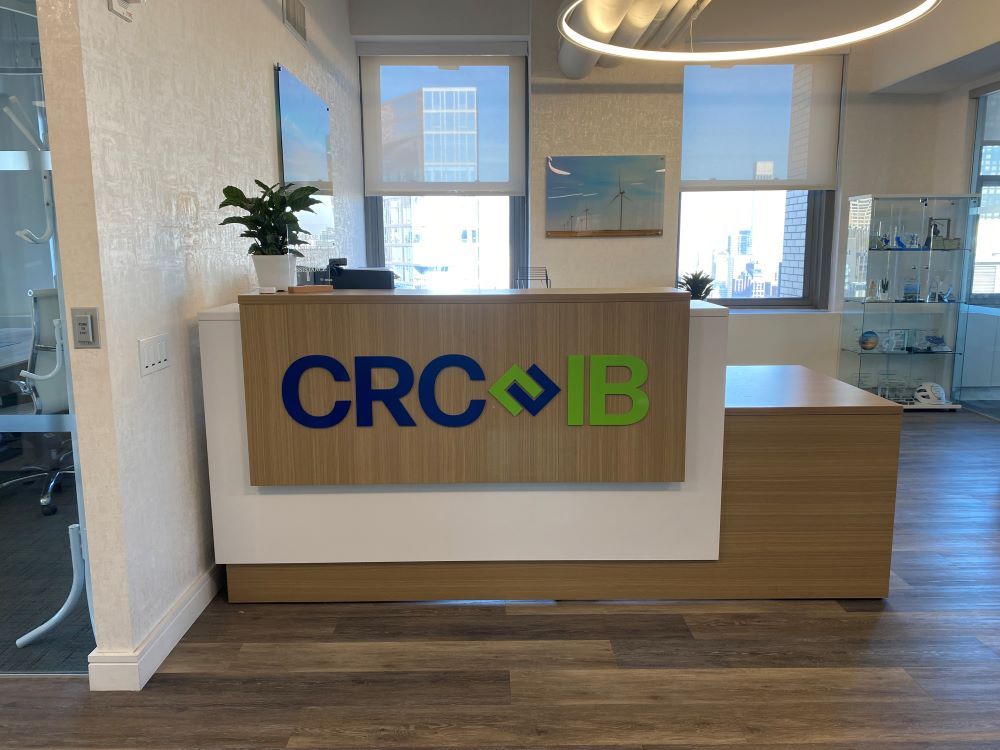
Our One Search office project includes dimensional acrylic reception lettering as part of a coordinated interior. For your sign, a complete brief helps us assess the work that will put the approved design on the wall, rather than quote the letters in isolation.
Stop letting clients walk past flat, forgettable walls. Street Style Sign Studio is your partner for creating premium dimensional signs in New York City that build trust and communicate quality from the moment someone enters your space. Contact our New York City team today to start making a bold statement with dimensional letters in NYC by designing a lobby or building sign that makes a lasting impression.
Everything NYC businesses usually ask before ordering dimensional letters or a 3D logo sign.
The most popular method is “stud-mounting.” Small, threaded rods (studs) are attached to the back of each letter. We then drill small, precise holes in the wall using a template and secure the letters, often with a “spacer” to make them “float” 1/4″ or 1/2″ off the wall, which creates a beautiful shadow. For smaller signs, high-bond adhesive tape is also an option.
Metal (like aluminum or steel) is the most premium and durable, offering a brushed or polished finish that’s unmatched for a high-end corporate or legal feel. Acrylic is a hard plastic that is more versatile. It offers a modern, high-gloss, or matte look, can be made in any color, and is often a more budget-friendly (but still premium) choice.
Yes. This is called a “halo-lit” sign. We place LEDs on the back of the dimensional letters, which casts a soft, elegant glow (a “halo”) onto the wall behind them. It’s a very popular and sophisticated look for lobbies.
Letter depth can range from 1/8″ for a subtle, flat-cut metal look, all the way up to 2″ or 3″ thick for bold foam or fabricated letters. The most common lobby signs are typically between 1/2″ and 1″ thick. We will recommend a depth that is perfectly scaled to your wall and logo.
It’s simple. For most materials like acrylic or painted PVC, a soft, clean microfiber cloth (like one used for eyeglasses) is all you need to gently remove dust. For brushed metal, it’s best to wipe gently in the direction of the grain. We will provide specific care instructions based on your chosen material.
Cost depends mainly on material, letter size and depth, number of colors, and whether the sign is halo-lit. PVC and foam options are the most affordable route to real depth, acrylic sits in the mid-range, and metal is the premium choice. The investment tends to pay for itself: a FedEx Office small business signage survey found that 68% of consumers say a business’s signage reflects the quality of its products or services. We provide an itemized quote after the design consultation once we know your exact letter count and depth.
It depends on where the sign goes. Interior lobby and reception signs usually need landlord or co-op board sign-off rather than a DOB permit, since nothing changes on the building’s exterior. Exterior building and storefront letters, especially halo-lit or illuminated ones, are far more likely to need a DOB sign permit because they attach to the facade. Getting this right matters for more than compliance: the same FedEx Office survey found that roughly half of small business owners believe they have lost customers simply because their sign was not clear or visible enough. We flag which approval path applies during your site survey.
High-density urethane foam, often called HDU, is a rigid, lightweight foam that can be carved or CNC-routed into deep, dimensional letters and shapes without the weight of metal or the flexibility limits of thinner plastics. It is a common choice for large-scale building letters, sandblasted or textured finishes, and projects where significant depth matters more than material weight. First impressions matter regardless of material: the same FedEx Office survey found that 76% of consumers have entered a store for the first time based on its sign alone.
A 3D acrylic sign is dimensional lettering cut from acrylic, which gives a cleaner, glass-like edge and works well with backlighting or halo effects. An HDU foam sign is carved or routed from foam, which is lighter and better suited to very large letters or textured, carved details. We help you choose between 3D acrylic signage and foam based on your size, budget, and whether the sign will be lit.