Get Professional Signage That Boosts Your Business Visibility, Fast & Hassle-Free!

Case Study — Production & Materials

Sign Lamination in New York City: How a Hidden Layer Determines the Quality, Finish, and Lifespan of Your Sign

Signs are not always what they appear to be — and in signmaking, that is very much a good thing. The finish, durability, and appearance of a sign are often determined by materials and techniques that most people will never notice. Lamination is one of the most important of these. At Street Style Sign Studio, we use lamination at multiple stages of production to protect our work, refine the appearance, and add value for our clients.

The Basics

What Is Lamination in Signmaking?

A lamina is a thin layer of material. Lamination is the process of creating or bonding that layer to something else. In the context of signmaking, lamination is used in two primary ways: applying a clear protective film over the face of a printed graphic, and bonding thin metal sheets to rigid plastic substrates to create metal-faced signs.

The machine used for sheet lamination — the laminator — consists of two vertical columns standing roughly four feet tall and six feet apart, with cylindrical rollers spanning the gap between them. Two of those rollers are driven by motors and have a narrow gap between them; they act as a six-foot-wide rolling press. A signmaker feeds two layers of material into that gap, and the rollers press them together into a single, bonded piece. The process is precise, fast, and produces a uniform bond across the entire surface.

Protective Film Lamination: Finish, Durability, and Specialty Coatings

The most common use of lamination at Street Style Sign Studio is applying protective film to the face of a printed graphic. Protective film — a clear, thin plastic sheet with an adhesive backing — is pressed onto the print using the laminator. The result is a sign that is more durable, more resistant to the elements, and more visually refined than the bare print would be.

Protective films come in different finishes: matte, satin, and gloss. By choosing the film, we control how reflective the final sign is — an important consideration for signs under direct light, in bright retail environments, or outdoors.

Anti-Graffiti Lamination

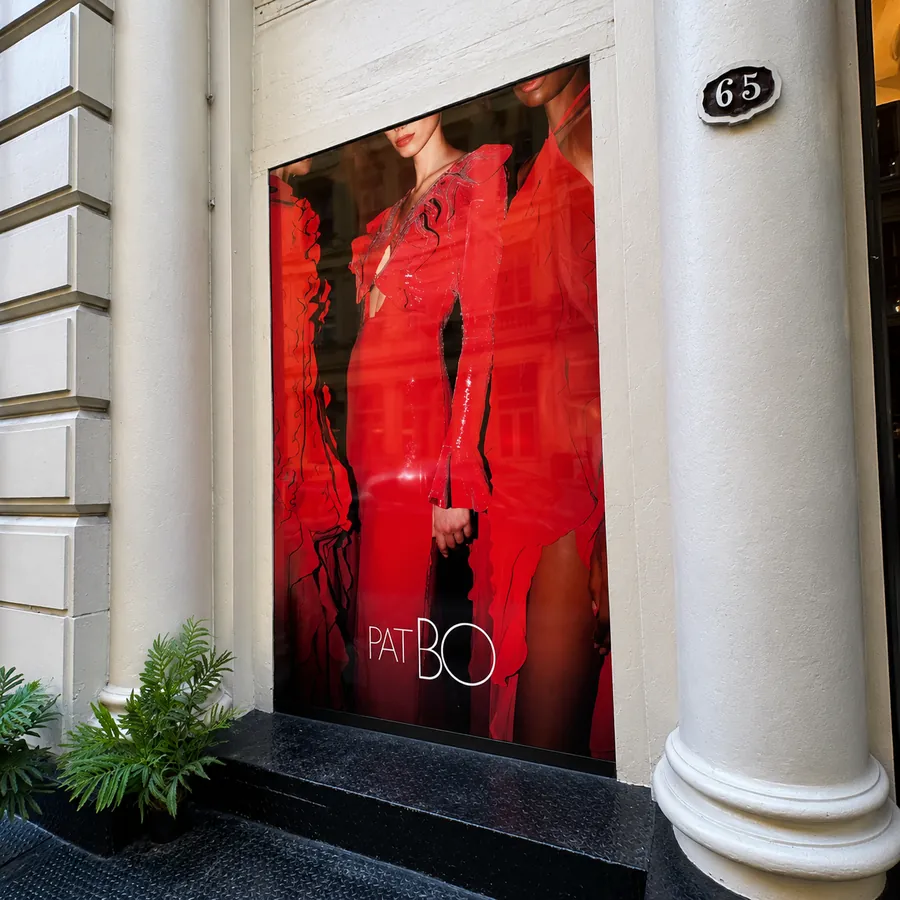
For signs installed in public-facing or high-exposure environments, we use anti-graffiti protective films. These specialty laminates create a surface that resists paint, markers, and adhesives — allowing graffiti or stickers to be removed without damaging the sign beneath. Anti-graffiti lamination is particularly relevant for exterior signage in New York City, where high foot traffic increases exposure risk.

Anti-Skid Lamination for Floor Graphics

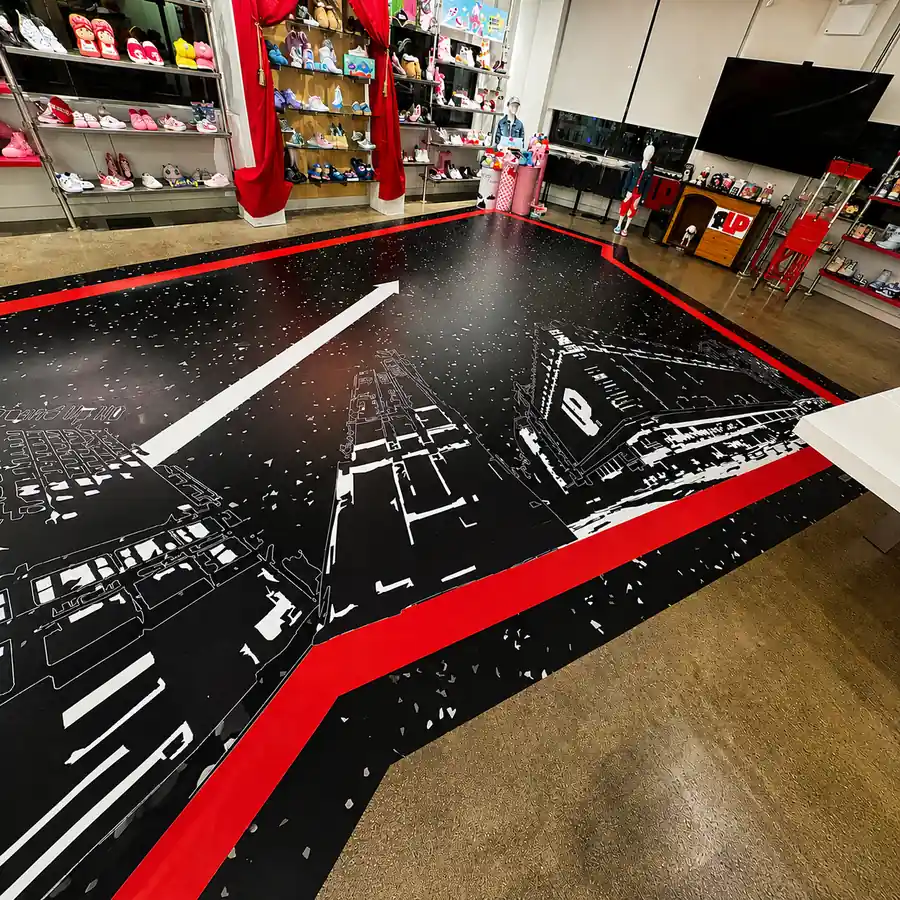
Floor graphics require a completely different protective film: anti-skid laminate. This specialty film increases traction and prevents slipping, making it safe to install printed graphics on floors in commercial spaces, retail environments, and event venues. Without anti-skid lamination, a floor graphic would be a slip hazard. With it, the surface meets safety standards while still delivering a sharp visual print.

Anti-skid laminate — a textured, slip-resistant clear film applied over a printed vinyl floor decal — is standard in all floor graphic production at Street Style Sign Studio.

Premium Finish

Metal Laminate: The Look of Metal at a Fraction of the Cost

A second and entirely different lamination process involves bonding thin metal sheets to rigid plastic substrates. In this process, metal sheets manufactured specifically for lamination — pre-coated on one side with adhesive — are pressed onto the rigid material using the laminator. The result is a rigid plastic board with a true metal face: aluminum, brass, or other metal finishes, depending on the specification.

This process produces signs that, viewed head-on, are nearly indistinguishable from solid metal signs. The sides of the plastic substrate are finished with metallic paint to complete the illusion. The advantage is significant: the weight is a fraction of solid metal, the cost is substantially lower, and the production time is faster — while the visual result is functionally identical for most applications.

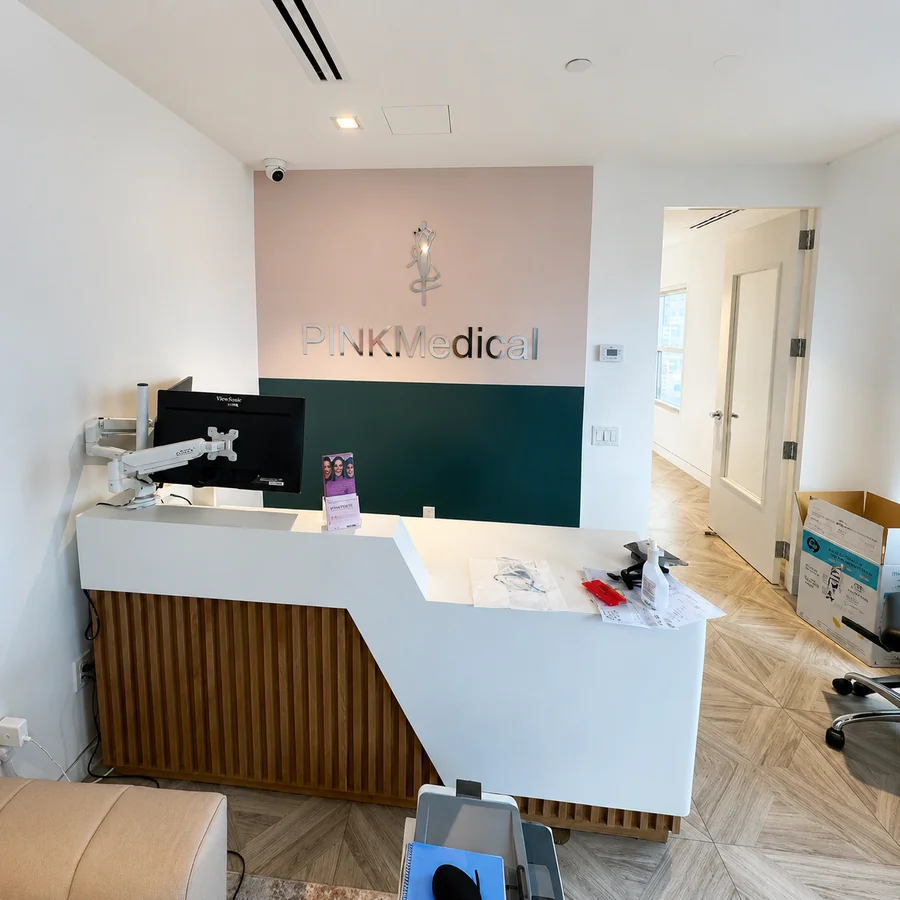
Metal-laminate signs are commonly used for dimensional plaques, building directories, reception signs, and professional office signage where a premium material appearance is expected but solid metal fabrication is not required.

Why Lamination Matters for Your Sign Project

Lamination is invisible when it works. A floor graphic that is safe to walk on, a reception sign that looks like solid aluminum, an outdoor graphic that survives a New York winter without peeling — these outcomes depend on lamination choices made during production. At Street Style Sign Studio, we select the right laminate for every application based on the environment, the substrate, and the performance requirement.

If you have a sign project with specific durability, finish, or environmental requirements, tell us at the outset. We will spec the right materials from the start.